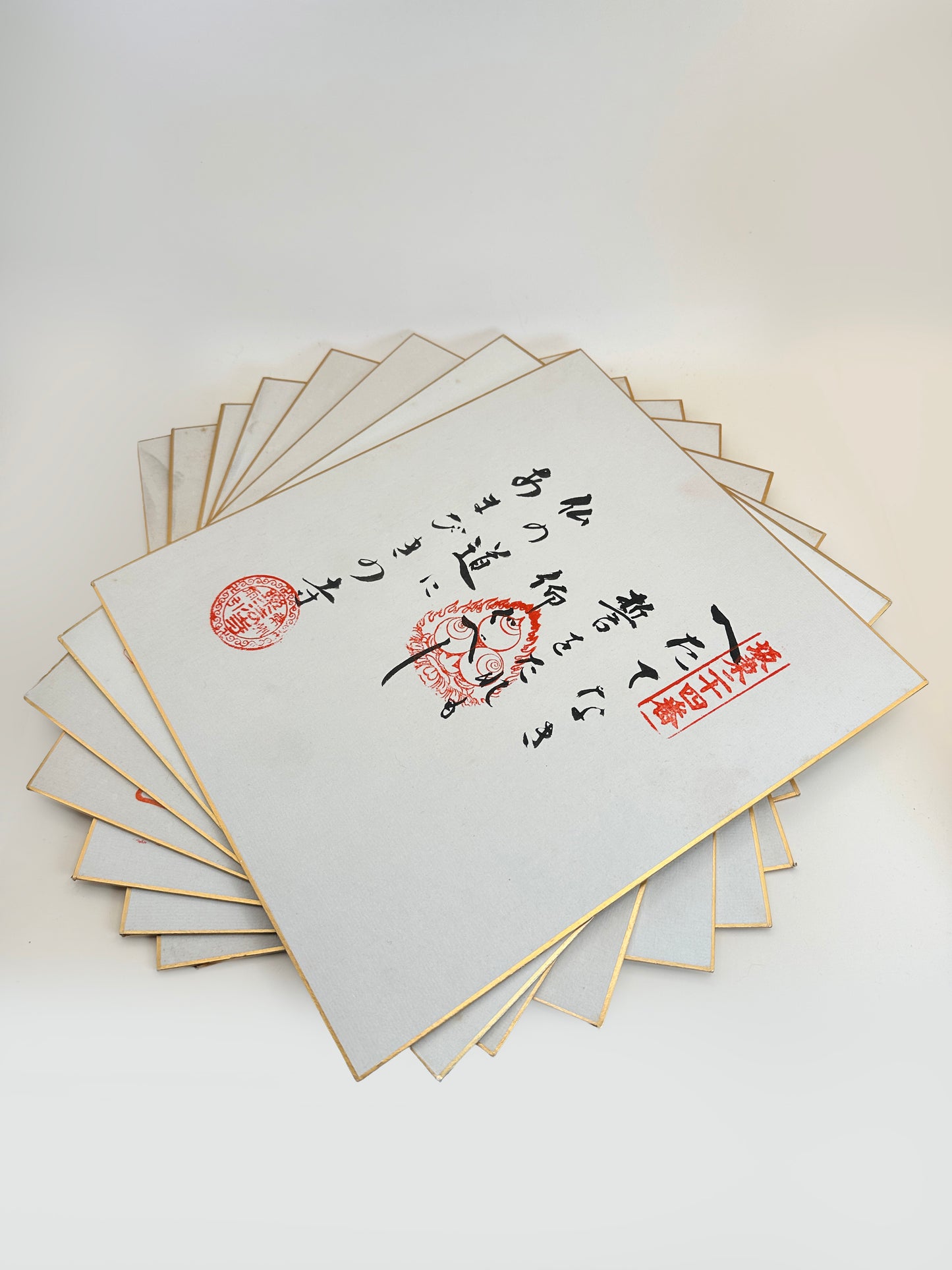
This is a set of eight shikishi-style goshuin cards (御朱印色紙), representing pilgrim seals from the Bando Sanjūsankasho (坂東三十三所) pilgrimage — specifically Stations 19 through 26. Each temple in this sequence is part of the historic Kannon pilgrimage circuit established in the Heian period, renowned for its long tradition of devotion and artistic calligraphy.
坂東十九番札所 天台宗 大谷寺(おおやじ)|栃木県宇都宮市
Bando Temple 19 – Ōyaji / Ōya-dera
Carved directly into a sheer cliff of volcanic tuff, Ōya-dera is one of the most visually striking temples of the Bando pilgrimage. Its principal image, a stone-carved Senju Kannon (Thousand-Armed Kannon), is believed to be Japan’s oldest Buddhist stone carving. The temple is known for its cavern-like worship hall, cool natural atmosphere, and deep sense of antiquity. Pilgrims regard it as a place of purification and rebirth.
坂東二十番札所 天台宗 西明寺(さいみょうじ)|栃木県益子町
Bando Temple 20 – Saimyō-ji
Set within tranquil mountain woodlands, Saimyō-ji is renowned for its three-storied pagoda, a nationally designated Important Cultural Property. The principal image is Juichimen Kannon (Eleven-Faced Kannon). The temple’s grounds, surrounded by old cedar trees and seasonal blossoms, emphasize harmony with nature and quiet contemplation.
坂東二十一番札所 天台宗 日輪寺(にちりんじ)|茨城県石岡市
Bando Temple 21 – Nichirin-ji
Nichirin-ji is dedicated to Senju Kannon, enshrined within a serene forest setting in the foothills of Mt. Tsukuba. The temple is sometimes called the “Temple of Morning Sun,” reflecting its eastern orientation and luminous atmosphere. Pilgrims value it as a site of inner clarity and prayer for guidance.
坂東二十二番札所 天台宗 佐竹寺(さたけでら)|茨城県常陸太田市
Bando Temple 22 – Satake-dera
With a history tied to the medieval Satake clan, Satake-dera is recognized for its austere Shinto–Buddhist syncretic atmosphere. The main image is Juichimen Kannon. Its thatched-roof main hall, one of the oldest of its kind in the region, lends the temple a rustic dignity. Known as a temple of protection and lineage fortune.
坂東二十三番札所 天台宗 観世音寺(かんぜおんじ)|茨城県笠間市(旧真壁郡)
Bando Temple 23 – Kanzeon-ji
Kanzeon-ji enshrines Shō Kannon, a form of Kannon associated with compassion and healing. Set upon gently rising terrain overlooking rice fields, it has long been a place where farmers prayed for good harvests and health. The temple’s understated architecture and peaceful landscape embody traditional rural spirituality.
坂東二十四番札所 天台宗 雨引観音(あまびきかんのん)・楽法寺(らくほうじ)|茨城県桜川市
Bando Temple 24 – Rakuho-ji (Amabiki Kannon)
One of the most beloved temples of the pilgrimage, Rain-Pulling Kannon (Amabiki Kannon) is famous for bestowing blessings for safe childbirth, child-rearing, and warding off misfortune. The temple is also known for its resident peacocks and its stunning hydrangea gardens in June. The principal image is Senju Kannon.
坂東二十五番札所 真言宗智山派 久寺家観音(くじけかんのん)・蓮華寺(れんげじ)|埼玉県越谷市
Bando Temple 25 – Renge-ji
Located in the Koshigaya area along old pilgrimage roads, Renge-ji’s principal image is Jūichimen Kannon. The temple has an intimate neighborhood atmosphere and is cherished as a protector of families, businesses, and travelers. Its small but historically rich precincts reflect everyday devotion passed down through generations.
坂東二十六番札所 天台宗 清瀧寺(きよたきじ)|埼玉県秩父郡皆野町
Bando Temple 26 – Kiyotaki-ji
Tucked into the mountains near the Chichibu region, Kiyotaki-ji is named for its pure waterfall, long considered sacred. Its principal image is Senju Kannon. Pilgrims have historically come here to pray for physical and spiritual cleansing. The temple offers sweeping natural scenery and carries deep ties to Shugendō (mountain ascetic practice).
Size: 24 x 27cm (Each)