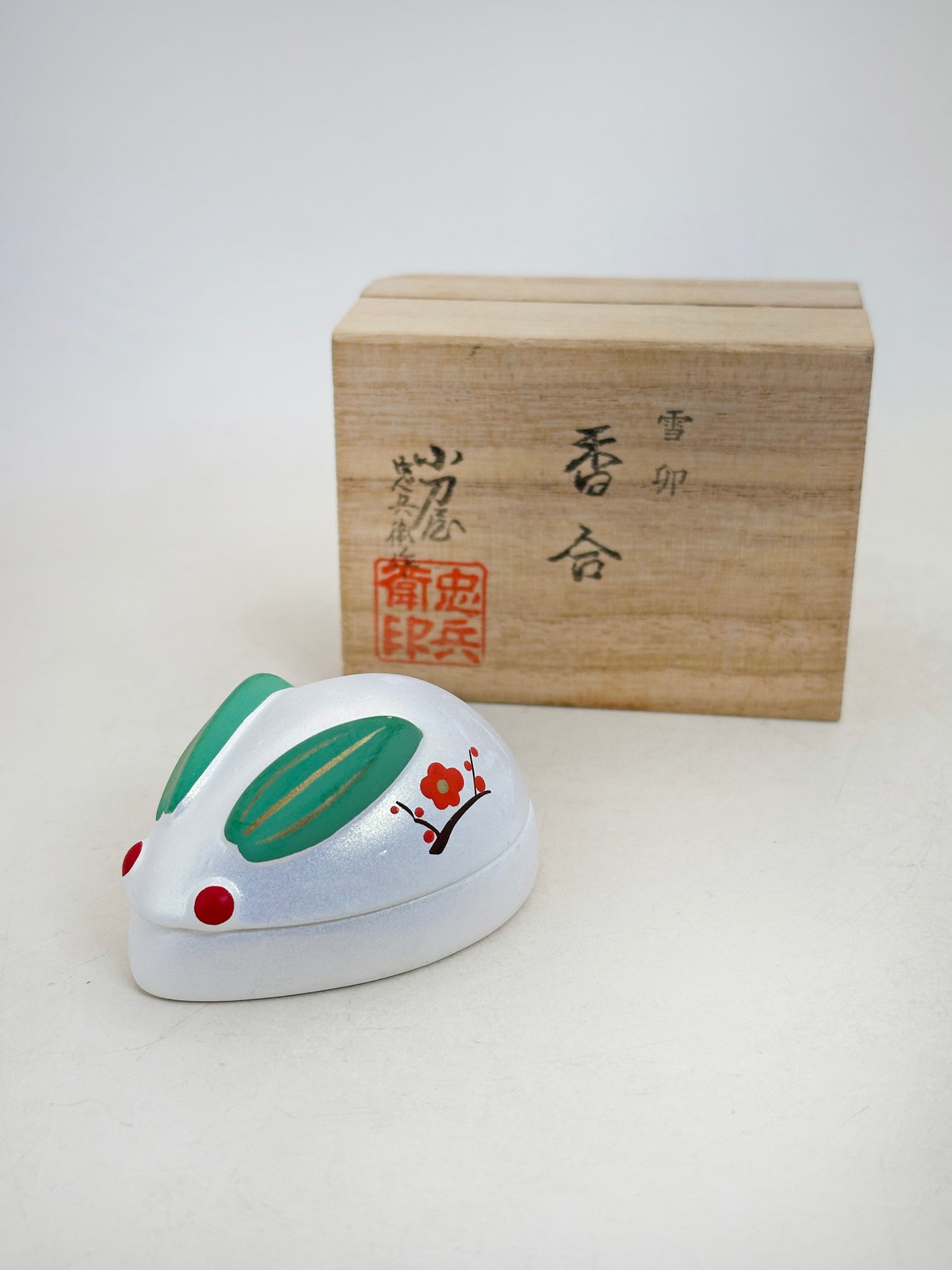
Este encantador kōgō (香盒, recipiente de incienso) tiene la forma de un delicado conejo blanco (雪卯, Yuki Usagi – "Conejo de nieve"), un motivo muy apreciado en la estética japonesa. Con su silueta suavemente redondeada, acabado nacarado, vívidos ojos rojos y elegantes orejas verdes acentuadas con oro, la pieza captura tanto la pureza del invierno como el espíritu apacible asociado con el conejo en la cultura japonesa. Una pequeña rama de ciruelo pintada a un lado añade un toque estacional, evocando la llegada de la primavera después de la tranquila quietud de la nieve.
La caja de madera original lleva la inscripción 「雪卯 香合」 (Yuki Usagi Kōgō) y la marca de Kotoya Chūbei (小刀屋忠兵衛), uno de los establecimientos más históricos de Kioto. Fundada en 1656 durante el período Edo, Kotoya Chūbei comenzó como un ryokan (posada) tradicional que servía a los viajeros en la antigua capital. Tras la era Meiji, el negocio evolucionó hasta convertirse en una reconocida tienda especializada dedicada a las muñecas de Kioto (京人形), las muñecas gosho (御所人形), los adornos del zodíaco y las artesanías decorativas de temporada, preservando las refinadas tradiciones artísticas de Kioto durante generaciones.
En la ceremonia del té japonesa, un kōgō se utiliza para contener incienso y se aprecia no solo por su función práctica, sino también como una expresión de estacionalidad y gusto poético. El conejo, por su parte, simboliza la buena fortuna, la dulzura, la fertilidad y el progreso seguro, mientras que la imagen del conejo de nieve encarna la pureza, la esperanza y la elegancia serena.
Bellamente elaborado y acompañado de su caja de madera original firmada, este recipiente de incienso vintage de Kioto es un maravilloso ejemplo de la perdurable artesanía de la ciudad. Ya sea exhibido como adorno estacional, atesorado por coleccionistas de arte popular japonés, o apreciado en el mundo del té y el incienso, ofrece una pequeña pero significativa visión del patrimonio cultural centenario de Kioto.
Tamaño: 6 x 4 x 3cm